
Good deals on rugby balls


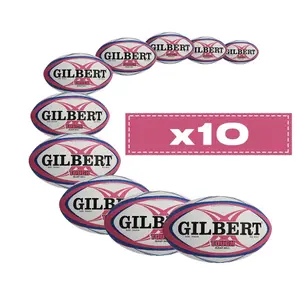
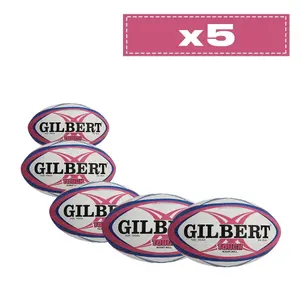
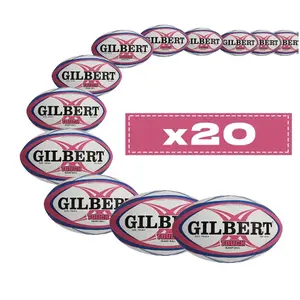
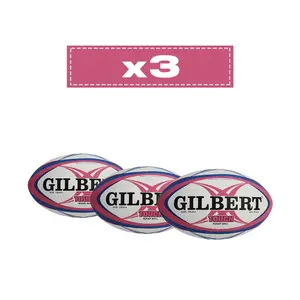

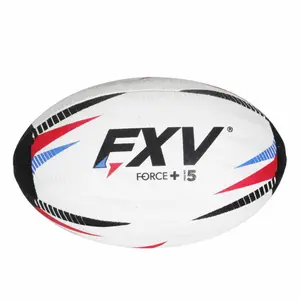
This selection of rugby balls at discounted prices covers all uses: balls in the colours of nations and clubs, like Clermont and Montpellier, match ball Berugbe Elipse, Gilbert ball for touch rugby, a set of ten balls from Wales for rugby schools and a foam ball Sporti for young children's first passes.
The oval ball, at a discounted price.
Size three, four or five: the right ball for every age
The size of the ball corresponds to the age and hand size of the player. The size five, the largest, is used for adults and teenagers from around fifteen years old; the game rules stipulate a length of 280 to 300 millimetres and a weight of 410 to 460 grams. The size four is for ten to fourteen years old, and the size three is for the youngest in rugby school. Even before these sizes, a foam ball like the Sporti Soft'rugby allows little ones to catch without fear.
Other good deals
Good deals also come in different forms:
All good deals are gathered on the promotions page.
Match, training or touch rugby ball
A match ball prioritises grip and accuracy for kick play: the Berugbe Elipse, designed for fifteen-a-side rugby, features a Dualgrip surface for a secure hold. A training ball, like the Trainer from Gilbert, withstands repeated sessions on wet ground better. Touch rugby, played without tackles, uses a specific ball, such as the Gilbert Touch, which is smaller than a fifteen-a-side ball. Finally, a weighted ball helps strengthen passing power.
Nation and club balls, and sets for rugby schools
Supporter balls reflect a team’s colours: France, England from the 2023 World Cup, Spain, Canada, Uruguay or Tonga for the national teams, ASM Clermont Auvergne or Montpellier for the clubs. They are used for passes among friends and are often displayed on a shelf. For educators, the set of ten balls from Wales outfits an entire group with identical balls, which is useful for organising passing workshops where each player has their own.
Other good deals
Great bargains are also found in the sales, clearance, Black Friday. The new arrivals showcase the latest collections. The year's highlights follow a stable order: Black Friday at the end of autumn, the holiday season, the winter sales, the French Days in spring, then the summer sales and back-to-school period.
Frequently asked questions
How do you inflate a rugby ball?
With a needle pump, which should be moistened before inserting it into the valve to avoid damage. Stop at the pressure indicated near the valve, checking it with a manometer if possible.
Why is the rugby ball oval?
At the beginning, the leather outer was sewn around a pig's bladder, whose elongated shape gave the ball its profile. The shape was later standardised, and the oval shape facilitates handling and kicking.
Why is a rugby ball often called a Gilbert?
Because the English brand has been making balls since 1823 and has supplied the World Cup ball since 1995. Its name has thus become commonplace among players and educators.
How do you store a rugby ball?
Keep it away from moisture and direct sunlight, slightly deflated if unused for several weeks. After a match in the rain, wipe it and let it dry at room temperature.
How do you choose a first ball for a beginner?
A training ball suitable for the player’s age, with a grip surface that is durable. For the littlest ones, a foam ball provides reassurance when catching and builds confidence from the first sessions.







