Good shoe deals Gilbert


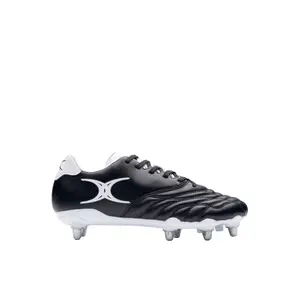

The rugby boots Gilbert on special offer extend a craftsmanship that began with a shoemaker: the Rugby brand, in England, started by making boots before becoming the name of the oval ball. This page gathers its models at reduced prices when available, from the versatile Sidestep to the Torq designed for fast players, along with our sole and size guides.
Boots from the ball specialist, at reduced prices.
Gilbert, a shoemaker at the origin of the oval ball
Before supplying the official ball for every World Cup since 1995, Gilbert was a shoemaker's shop. In 1823, William Gilbert was making shoes in his store in the town of Rugby, near the school where the game took shape, and he was already sewing balls for the students. His nephew James took over the business after his death in 1877. Today, offering studded shoes is the brand's way of reconnecting with its origin: its models are designed exclusively for rugby, with generous shapes and soles made for soft pitches.
The other brands
Good deals on shoes are also available:
All the good deals on shoes are gathered on the shoes page.
Sidestep, Power or Torq: three types of shoes
The Sidestep is the most popular shoe from the brand: versatile, it combines power and comfort, making it suitable for forwards as well as players who frequently change roles during a match. Its Power version, with six screw-in studs for soft ground, focuses on durability and stability while remaining lightweight, allowing for quick changes of direction without losing grip. The Torq, more streamlined, targets quick and agile players, usually backs, who are constantly accelerating and changing direction on soft ground. The role played in the team therefore influences the choice of model.
Soft, dry or synthetic ground: which Gilbert sole
The screw-in stud sole, known as SG, is for saturated natural grass: the metal spikes penetrate the mud and hold during pushes. On dry, hard grass, typical of spring or late summer, a moulded sole with fixed studs distributes pressure better underfoot and prevents foot pain. On synthetic turf, metal is not allowed, in favour of short and numerous studs. A player training on synthetic and playing on grass often needs two pairs, which is exactly where a discounted offer becomes interesting.
The other good deals
Good bargains can also be found in the sales, clearance, Black Friday. The new arrivals showcase the latest collections. The key events of the year follow a steady order: Black Friday in late autumn, the end of year holidays, the winter sales, the French Days in spring, followed by the summer sales and back to school.
Frequently asked questions
Do Gilbert shoes fit wide?
The Sidestep is known for its naturally wide fit, appreciated by players with strong feet. The Torq, more tapered, is better suited for a narrow foot; if in doubt between two sizes, try it with your match socks.
What do 6S and 8S mean on a Gilbert shoe?
These mentions indicate the number of screw-in studs: six for a freer foot rotation and smoother running, eight for maximum grip in the mud, often sought by forwards during scrums and mauls.
Should you break in a new rugby shoe before a match?
Yes, wear it first during two or three training sessions to let the upper adjust to your foot. Playing a full match with a pair you’ve never worn before can lead to blisters and heel overheating.
How to know if a Gilbert shoe is allowed in a match?
The studs must comply with World Rugby Regulation 12: no longer than twenty-one millimeters and with no sharp edges. The referee or their assistant can check the soles before kick-off.
How to replace the screw-in studs of a Gilbert?
Unscrew the worn spikes with a stud key, clean the threading with a brush to remove dirt and sand, then screw the new spikes in by hand before a final moderate tightening with the key.